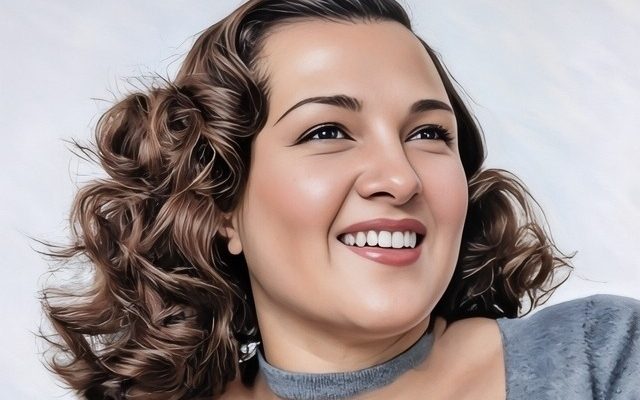
“For You”
Composed by Joe Burke and Al Dubin; arranged by Sy Oliver.
Recorded by Tommy Dorsey and His Orchestra for Victor on January 20, 1941 in New York.
Tommy Dorsey, first and solo trombone, directing: Ziggy Elman, first and solo trumpet; Ray Linn, split first trumpet; Chuck Peterson and Jimmy Blake; trumpets; George Arus, Les Jenkins and Lowell Martin, trombones; Freddie Stulce, first alto saxophone; Johnny Mince, alto saxophone; Don Lodice and Paul Mason, tenor saxophones; Henry “Heinie” Beau, baritone saxophone; Joe Bushkin, piano; Clark Yocum, guitar; Sid Weiss, bass; Buddy Rich, drums; Jo Stafford, vocal.
The story – part one – Tommy Dorsey and his workaholics:
A major story in the world of swing as 1941 began was the battle between the radio networks and ASCAP. This dispute, which had begun some time before 1941, had reached the point where both sides were dug-in: Here is the headline from Down Beat, January 1, 1941, p. 1: “ASCAP BAN ON NETWORKS NOW OFFICIAL …New York—Fortified with two highly valuable music catalogs, Broadcast Music, Inc., was prepared to go down the line in its battle with ASCAP as the deadline time arrived when no ASCAP controlled music is to be heard over the nation’s networks and hundreds of independent radio stations. Starting today, Jan. 1, there will be no ASCAP music on any of the networks. That includes sponsored as well as_ sustaining programs. BMI, music publishing house financed by the radio industry, last month acquired performing rights to the catalogs of Edward B. Marks Music Corp., and the Sociedad Argentina and Compositores de Musica of Buenos Aires, which controls many of the best-known rhumbas and tangos heard in the United States. Band leaders have dropped their theme songs and signatures, if they are ASCAP controlled, and substituted new ones or none at al. The controversy has put hundreds of bands on the griddle. Unable to broadcast many of the songs Americans want and expect them to play, they are being forced to use BMI or public domain songs or else have their broadcasting privileges rescinded. Naturally, most leaders are complying with the networks’ rulings. BMI also obtained rights to 5,000 hillbilly, race and novelty songs in the catalog of Southern Music, Inc.
This, coupled with the Marks and South American acquisition, greatly strengthens BMI’s case and likewise gives bandleaders more scope in making arrangements of songs to be used on the air. Few officials of either BMI or ASCAP see any hope of a settlement soon.”
 While all of this was going on, Tommy Dorsey was immersed, as always, in trying to operate his band both as a musical organization, and as a business. On Tuesday December 17, 1940, the Dorsey band opened a four-week engagement at the Paramount Theatre in New York. That gig lasted until January 14, with the band playing five one-hour shows each day, and accompanying the supporting act, the fabulous dancing Nicholas Brothers. The film was Love Thy Neighbor.
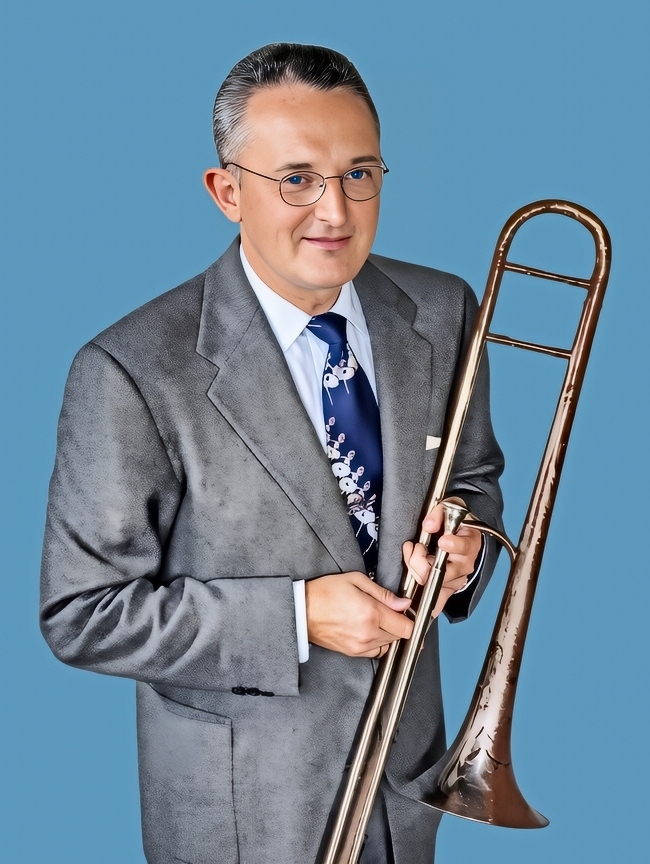
As challenging and exhausting as this was, it was only a part-time job for Tommy Dorsey. On Thursday December 19, and every following Thursday during the Paramount Theater gig, Tommy and his band rehearsed for and broadcast over NBC their sponsored Fame and Fortune radio show, which was aired live from 8:30 to 9:00 p.m. from one of the studios in what was then the RCA Building (now called 30 Rock) in Manhattan. Then on Saturday December 21, Tommy and company broadcast for an hour over NBC from 5 to 6 p.m. in a series called The Dorsey Hour. Then, as if to make this story even more amazing, on Monday December 23, 1940 the Dorsey aggregation flew to Detroit to play at a private party at a place called Percival Lodge. Charlie Barnet and his very hot band (with Lena Horne singing) substituted for Tommy at the Paramount Theatre. The following Thursday meant another rehearsal for and broadcast of the Fame and Fortune radio show. The Sunday after that, the Dorsey band appeared on the NBC Fitch Bandwagon show from 7:30 to 8:00 p.m. (Above right: Tommy Dorsey – workaholic.)
 As 1941 began, Tommy and his management team thought it was time to make some more records for Victor. Consequently, sessions were scheduled for January 6 (10:30 a.m. to 12:30 p.m.), then TD and company raced from Victor’s East 24th Street studio to the Paramount Theater on Times Square. They returned to the Victor studios on the 15th. (The Dorsey band closed at the Paramount the night before.) On January 16, Tommy, Ziggy Elman and Buddy Rich went into the Victor studio again to make a Metronome All-Star recording date. They then raced from the Victor studio to Radio City to rehearse for and then broadcast their regular Thursday Fame and Fortune radio show. (At left: the Paramount Building on Times Square in Manhattan in the early 1930s. To its right is Hotel Astor. Both of these venues would be important in the late 1930s and early 1940s for Tommy Dorsey and his band. The marquee and entry to the Paramount Theater is at the lower left part of the image.)
On Saturday January 18 and into the 19th, the Dorsey entourage was playing at the Marine barracks at Quantico, Virginia. They were cut-in via a remote broadcast connection to the CBS Your Hit Parade radio show which was broadcasting live from a CBS studio in Manhattan for both its east coast broadcast (9 to 9:45 p.m.), and the its west coast repeat broadcast from 12 midnight to 12:45 a.m. Immediately after this, they returned to New York, (probably by plane), and appeared at 3:00 p.m. and 8:30 p.m. at the Westchester County Center (White Plains, Long Island), to play two concerts as a part of a presentation called the Super Stage Show.
The next day, Monday January 20, they were assembled at Victor’s studio 2 at 9:30 a.m. to make recordings until 1:30 p.m. (1) Whew!
The story – part two – Jo Stafford in the Dorsey band.
NOTE: The story of how Jo Stafford and the Pied Pipers joined Tommy Dorsey’s band is told in the post here at swingandbeyond.com on “Manhattan Serenade,” which can be accessed at endnote 2. That post also explains how Ms. Stafford went from being just the lead singer of the Pipers to being a featured solo vocalist with Tommy Dorsey’s band. This post adds to that story.
 Whenever critical appraisals of someone’s performance of any human activity, including music, is made, I have found that the most valuable input usually comes from other people who do the same thing. Great singers have the insight to truly understand and appreciate what other great singers do. Here are a few critical appraisals of Jo Stafford’s singing made by her singing peers: Mel Torme’ “Jo Stafford is utterly incapable of singing out of tune. (1A) In the huge panoply of singers past and present, she stands out as one of the truly great singers of the Twentieth Century.” Rosemary Clooney: “The voice says it all – beautiful, pure, straightforward, no artifice, matchless intonation. Instantly recognizable.” Johnny Mathis: “I was thirteen years old when my father introduced her music to me. I came to realize that this was one of the great classic singers of popular music. …She sings right in the middle of the tone. She is a great artist and a joy to listen to.” Judy Collins: “Jo Stafford is one of the greatest singers of all time. Her recording of ‘Barbara Allen’ changed my views – from Mozart to ‘Both Sides Now.'” Joe Williams (who always addressed Ms. Stafford as “Pipes”): “She’s all right, if you like people who sing in tune.”(3) (Above right: Jo Stafford in 1941.)
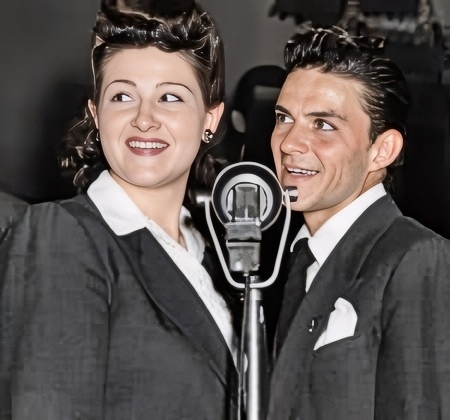 In retrospect, and with some guidance from Jo Stafford herself over many years in countless interviews, we can understand why from the time she and the Pied Pipers joined the TD organization in very early 1940 (slightly before Frank Sinatra) until well into 1941, she was used by Tommy almost always with the Pipers. First, she loved singing lead with the Pipers, and of course, they loved her doing that. Second, she did not have a gigantic ego like some other performers in the TD band. Tommy’s ego was immense; those with slightly less immense egos were Frank Sinatra and Buddy Rich. They were always trying to elbow their way into the spotlight. Jo did not have a burning need to be onstage singing alone in the spotlight. Third, she generally regarded the stagecraft and histrionics that many solo vocalists engaged in as being corny and degrading. Although she understood why stagecraft was important in relating to audiences, and never criticized the performers who excelled at it, she knew that that was not her. She considered herself a musician, not an entertainer. (Above left: JS and FS in 1941. She towered above him, even when he had his elevator shoes on. But his ego and drive to become a star dwarfed hers. Nevertheless, they liked and respected each other greatly.)
 Finally, she was not everyone’s ideal for a girl singer with a swing era big band. She stood about five feet ten inches tall, and was cool (in a hip – or hep way, in early 1940s jargon) in both her personality and in her approach to a song. She was intelligent, articulate and thoughtful. She was also attractive in a subtly sensuous way, despite the fact that in 1940-1941, she weighed about 180 pounds.
Tommy Dorsey was as aware of Jo Stafford’s skill as a singer as anyone in the Dorsey band. But he was also aware that she really didn’t want to be a solo singer, and that she was not the mainstream audience’s idea of a girl singer, and that was the audience that supported his band. He therefore began an experiment: he would start giving her songs to record and/or perform on radio broadcasts, which he was certain she would do well, then see how record buyers and audiences reacted. Here are a number of songs he had her sing as a soloist early-on: “Darn That Dream” 02-21-40; “Say Si Si” “I Can’t Give You” 02-21-40; “If I Had You” 03-09-40; all from Meadowbrook sustaining broadcasts. “How Come You Do Me Like You Do?” 07-20-40 – Dorsey Hour/Astor broadcast .”Sweet Lorraine” on the sponsored 12-05-40 Fame and Fortune show; “If You Would Only Change Your Mind” 02-07-41; “Whatcha You Know, Joe?” and “Candy Cigar” 02-07-41; “Yes, Indeed” 02-17-41, Victor recordings.
(NOTE: Connie Haines was Tommy’s regular featured girl singer from April of 1940 until she left the Dorsey band in early 1942.)
At some point, after Tommy looked at the sales figures for the records Jo Stafford made with him (they were positive), and saw how audiences reacted to her singing (also very positive), I suspect that he had a conversation with her that went something like this: TD: Josie, it’s clear to me that you will be successful as a solo singer. That doesn’t mean that I want you to leave the Pipers.(4) But I am going to feature you more as a solo singer. You have everything you will need to have a big career as a solo singer. The more you are heard with my band, the sooner the public will begin to recognize your name. JS: But Tommy… TD: No, ifs, ands or buts. Audiences are going to see and hear you more with my band. You have a very bright future as a solo singer. But for chrissake, lose some weight! A few less cheeseburgers and malts, OK? JS: But Tommy… TD: I gotta go, kid. My manager wants to talk to me about some nice work for us.
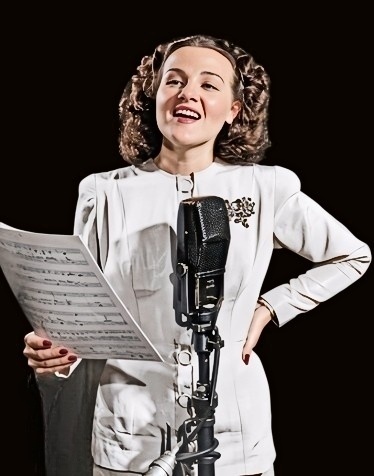
Starting in early 1941, even though Connie Haines was still TD’s main girl vocalist, Tommy did begin to present Jo Stafford more often as a solo singer. The public did in fact start to recognize her, an she became more and more popular. She did however still remain the lead voice for the Pied Pipers. She and they continued working for TD through 1942 and into 1943. (At right, a slimmer Jo Stafford who by the mid-1940s was on her way to a successful career as a solo singer.)
She and they left Dorsey then and began a fruitful association with Johnny Mercer and former TD arranger Paul Weston at the newly formed Capitol Records in Los Angeles. Soon thereafter, her popularity continued to increase to such an extent that she left the Pipers, and began what would be a very successful career as a solo singer. Not incidentally, she married Paul Weston in 1952, and they had a successful marriage and two children.
The music:
This brilliant Sy Oliver arrangement, alternately smooth and serene, then blasting and raucous, is a study in contrasts. It brought new life to what had been essentially an ephemeral pop tune that had appeared and vanished a few years before this recording was made. “For You” is a song written by Joe Burke and Al Dubin in 1930, then was featured in a 1932 Mack Sennett film-short entitled Billboard Girl, in which it was sung by Bing Crosby, who was then just beginning to work in Hollywood films. The song was not recorded very often, but was taken up by the Casa Loma band. They used it as a vehicle for the romantic singing of Kenny Sargent through the 1930s. The version presented with this post was the “A” side of a twelve-inch Victor record, and it established the song among jazz musicians. It became a semi-standard through the 1940s and 1950s. The most successful commercial recording of it was made by Ricky Nelson in 1964, guided by his father, former bandleader Ozzie Nelson.
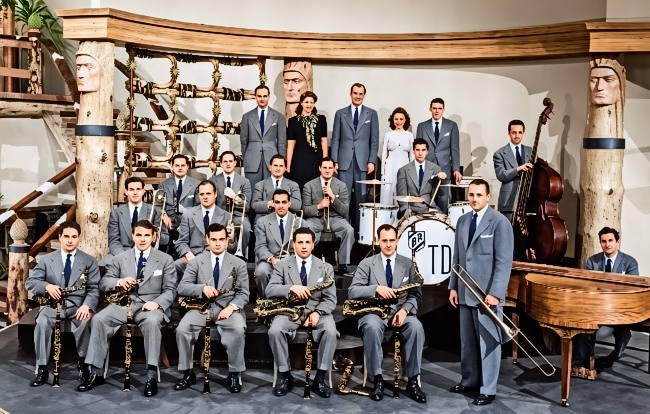
Tommy Dorsey and his band posing on the set of the Paramount Film Las Vegas Nights in late 1940. L-R front: Heinie Beau, Johnny Mince, Freddie Stulce, Don Lodice, Paul Mason, TD, Joe Bushkin; middle (trombones): Lowell Martin, Les Jenkins, George Arus; middle: Clyde Hurley, Ray Linn, Chuck Peterson, Ziggy Elman, Buddy Rich, Sid Weiss; back: Clark Yocum, Jo Stafford, John Huddleston, Connie Haines and Frank Sinatra.
When this recording was made, Tommy Dorsey’s band had reached a point where, when necessary, they could move walls with their volume. The ensemble was big – eight brass, with Ziggy Elman, one of the loudest trumpeters of the swing era, very often leading the trumpets, and TD, who also could blast, leading the trombones. The TD veteran (since 1936) Freddie Stulce, who had played various roles in the Dorsey saxophone section (rarely if ever as a soloist however), was leading the reeds, projecting a big, gleaming sound. The four-man rhythm section was led by drummer Buddy Rich, who definitely knew how to add heft to the big band sound.
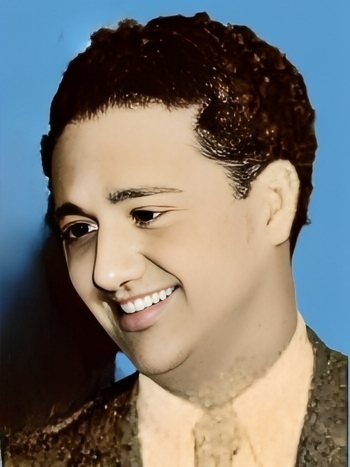 Another musician who played many roles in the TD saxophone section then was the talented Henry “Heinie” Beau, who had joined the Dorsey band in August of 1940. While he was with Tommy, Beau played alto, tenor and baritone saxophones, and after Johnny Mince left the band in the spring of 1941 (he was drafted), Beau took over the clarinet solos. He handled all of these roles very well. Here, he plays the baritone saxophone with distinction. (At left: Heinie Beau.)
This performance begins at a medium tempo with an eight-bar introduction that hints at the power of the Dorsey ensemble (Elman prominent on lead trumpet), with a paraphrase of the main melody (A) of “For You.” Heinie Beau states the A melody in the first chorus backed by rhythm only, his baritone saxophone tone sounding much like that jazz great Gerry Mulligan would employ a decade later. He plays the first six bars, then the trombone quartet (led by TD) play the last two bars. (This six and then two bar antiphonal scheme will be used throughout this performance to provide an ongoing series of contrasts.) This modified call-and-response is then repeated in the second eight bars.
 Beau then continues on into the bridge (B melody), playing elegantly, but here he is soon joined by Tommy, who plays harmony notes to Beau’s melody notes, quiet reeds, the other trombones and finally the trumpets. The ensemble blasts into the final eight bars of the first chorus, but again is soon quieted by contrasting soft reeds, and Tommy’s doleful trombone singing out …For You, For You.
The second chorus belongs to the band, rocking away in Luncefordian fashion on Sy Oliver’s arrangement for sixteen bars, then another series of contrasts. First, with pianist Joe Bushkin playing a melodic solo on the first few bars of the bridge, then with the band returning forcefully. Then, the harmonized saxophone quintet plays melodically without any rhythm accompaniment, followed by the entire ensemble, with rocking rhythm. A modulation takes the music into the vocal chorus. (Above right: Sy Oliver.)
 Ms. Stafford begins to sing – pitch-perfect, superb voice quality and gently swinging. Arranger Oliver continues his call-and-response pattern in this vocal chorus. Note how he has the reeds, led with gusto by Freddie Stulce (5), then the Elman-led muted brass, play tag with Jo’s voice through the sixteen bar A melody sequence. On the bridge (B) she gets solid backing from Joe Bushkin on piano, the trombone quartet, and the saxophones. The last eight bars have Jo swinging a bit harder against muted trumpets, then open trombones and finally, resonant saxophones. (At left in front: Tommy Dorsey, Jo Stafford and Heinie Beau.)
An ensemble burst then brings Ziggy Elman forward for a brief (six bars), passionate open trumpet solo. What is going on behind him is most interesting: heavy back-beats from Buddy Rich and the low trombones supporting roiling saxophones. The trumpet section takes the last two bars of this eight bar tract.
Heinie Beau then returns to bring this performance to its quiet conclusion.
This is a masterful performance by a virtuoso big band of a creative, well-paced arrangement filled with contrasts, and an excellent example of singing in the swing idiom by Jo Stafford, who was just beginning her distinguished career as a solo singer.
This recording was digitally remastered by Mike Zirpolo.
Notes and links:
(1) Much of the information that chronicles the activities of Tommy Dorsey and his band from late December of 1940 through January 20, 1941 comes from the excellent American Music Research Center/University of Colorado at Boulder Glenn Miller Collections chronology prepared by Dennis Spragg.
(1A) Jo Stafford could sing out of tune, but only when she wanted to, and did as a parody on the Jonathan and Darlene Edwards comedy records she made in the 1950s with her husband Paul Weston..
(2) Here is a link to Jo Stafford singing “Manhattan Serenade” with Tommy Dorsey’s band: https://swingandbeyond.com/2021/04/09/manhattan-serenade-1942-tommy-dorsey-with-jo-stafford/
(3) The quotes from Jo Stafford’s singing peers come from the liner notes for the CD set Jo Stafford – The Portrait Edition (1979) Corinthian Records, reissued (1994) Sony Entertainment.
(4) Tommy Dorsey did not want Jo Stafford to leave the Pied Pipers because they were a very popular part of the TD presentation. Their recording of “I’ll Never Smile Again” (5-23-1940, which included Frank Sinatra both with the Pipers and singing alone), was one of Tommy’s biggest hits.
(5) Query: Regarding the ringing, resonant sound of lead alto saxophonist Freddie Stulce’s playing behind Jo Stafford, did Sy Oliver have a talk with Stulce about maybe listening to Sy’s Lunceford band colleague Willie Smith, one of the loudest lead alto players of the swing era, as an example of what he (Oliver) wanted to hear in the saxophone section bursts that punctuate Jo’s singing?
Here is a link to another great TD/Sy Oliver/Jo Stafford collaboration: https://swingandbeyond.com/2020/02/01/yes-indeed-1941-tommy-dorsey-with-sy-oliver-and-jo-stafford/
Here are some other examples of the brilliant collaboration between Tommy Dorsey and Sy Oliver:
https://swingandbeyond.com/2016/12/01/on-the-air-with-the-great-bands-1940-tommy-dorsey-hallelujah/
And finally, perhaps the most famous of the TD/Oliver collaborations: https://swingandbeyond.com/2024/02/09/opus-one-1944-tommy-dorsey-sy-oliver-with-buddy-defranco-glen-gray-1959-with-gus-bivona-gene-krupa-1945-with-anita-oday-and-don-fagerquist/


Be the first to comment